
Foodera Technologies’ MVR technology selected for the INTERPOM 2026 Innovation Tour

Foodera Technologies’ Mechanical Vapor Recompression (MVR) technology, developed jointly by Tummers and Callens, has been selected for the Innovation Tour at INTERPOM 2026! This technology offers a new approach to energy recovery in potato flake production.

The selection recognizes the potential of our development and puts a spotlight on the collaboration behind it. But what exactly does this technology involve, how did the partnership between Tummers and Callens come about, and most importantly, what could MVR mean for your production process?
 

A partnership built on complementary expertise

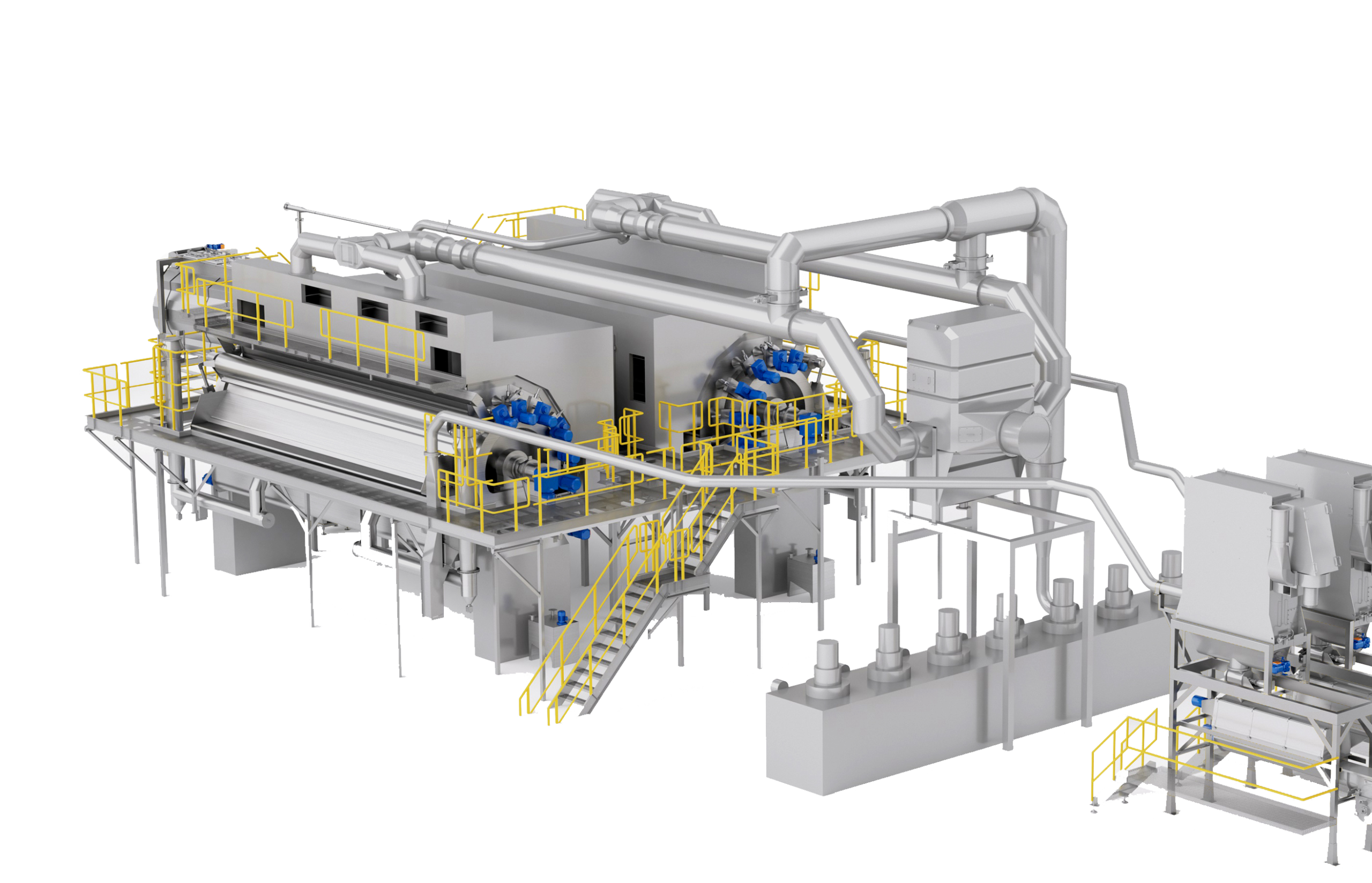
The MVR technology builds on the earlier development of Tummers’ E²E SteamClosure and combines Tummers’ expertise in potato processing with Callens’ knowledge of industrial energy systems.

While the E²E SteamClosure captures residual heat from the drum drying process for reuse elsewhere in the production line, MVR takes energy recovery a step further. It captures vapor released during drying, compresses it to increase its temperature and pressure, and converts it into clean steam that can be reused directly in the drum dryers. This reduces energy losses and the need for additional energy from conventional sources.

Read more about our collaboration with Callens.

From engineering to the first pilot installation

Combining drum drying with mechanical vapor recompression presented a new engineering challenge for Tummers and Callens. Together, they have developed the technology into an industrial application, with the first pilot installation currently being built at Aviko Rixona which is expected to be completed towards the end of this year.

The pilot is targeting a Coefficient of Performance (COP) of 4. This means that for every unit of electrical energy supplied, the system aims to deliver approximately four units of thermal energy. Based on the expected performance of this first installation, the technology has the potential to reduce CO₂ emissions by approximately 8,000 metric tons per year.

These figures illustrate the potential impact of MVR technology, although actual results will depend on the performance of the pilot installation and the specific production conditions.

By recovering and reusing energy within the drying process, MVR offers you an opportunity to reduce natural gas consumption, lower CO₂ emissions and improve overall energy efficiency. It also supports the transition toward electrification while helping limit additional demand on the electrical grid.

Combined with the Tummers E²E SteamClosure, MVR brings potato flake production closer to a circular energy process, where less energy is lost and more is put to work. It could also open up opportunities for wider application across the potato processing industry.

A step toward more sustainable potato processing